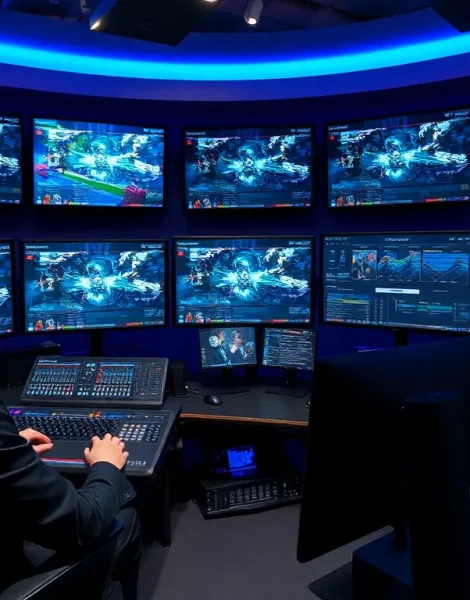
Esports coverage tools have become essential for anyone broadcasting competitive gaming events. These software solutions help streamers, tournament organizers, and analysts deliver professional-quality content to audiences worldwide. From live streaming platforms to real-time statistics software, the right tools can transform an amateur broadcast into a polished production.
The esports industry generates billions in revenue annually. Professional broadcasts require more than just a camera and microphone. They need dedicated software that handles everything from video encoding to data visualization. This guide breaks down the most important esports coverage tools available today and explains how to select the best options for specific needs.
Table of Contents
ToggleKey Takeaways
- Esports coverage tools include broadcasting software, analytics platforms, graphics tools, and production suites that work together to create professional-quality broadcasts.
- Free options like OBS Studio and NodeCG can deliver impressive results, while paid solutions like vMix offer advanced features for larger productions.
- Real-time statistics software from providers like GRID and game-specific APIs enables commentators to enhance broadcasts with live data and compelling narratives.
- Choose esports coverage tools based on your budget, team size, game titles, and broadcast frequency to match your specific production needs.
- Always test tools before committing and prioritize seamless integration between your broadcasting, analytics, and graphics software.
- Start with simple setups and gradually expand your toolkit as your audience and resources grow.
What Are Esports Coverage Tools?
Esports coverage tools are specialized software applications designed to support competitive gaming broadcasts. They serve different functions depending on the type of coverage being produced.
These tools fall into several categories:
- Broadcasting software captures and streams gameplay footage
- Analytics platforms track player and team performance data
- Graphics tools create overlays, scoreboards, and visual effects
- Production suites combine multiple functions into unified systems
Professional esports organizations use these tools to create broadcasts that rival traditional sports coverage. A typical League of Legends or Counter-Strike tournament uses dozens of different esports coverage tools working together. Camera operators, statisticians, and graphics designers each rely on specific software to do their jobs.
Smaller content creators also benefit from these tools. A Twitch streamer covering a local tournament can use free or low-cost options to add professional touches to their broadcast. The accessibility of modern esports coverage tools has democratized high-quality production.
Live Streaming and Broadcasting Platforms
Live streaming platforms form the foundation of any esports broadcast. These tools capture gameplay, encode video, and transmit it to viewers in real time.
OBS Studio remains the most popular free option. It offers scene composition, audio mixing, and direct streaming to platforms like Twitch and YouTube. Many professional broadcasts start with OBS as their base.
Streamlabs builds on OBS with additional features like integrated alerts, chat widgets, and monetization tools. It’s particularly popular among individual streamers who want an all-in-one solution.
vMix serves professional productions with features like instant replay, multi-camera switching, and virtual sets. Major esports tournaments often use vMix for its reliability and advanced capabilities.
XSplit offers a middle ground between free tools and professional software. It provides clean interfaces and solid performance without the steep learning curve of high-end solutions.
When selecting broadcasting software, consider these factors:
- CPU and GPU requirements
- Supported streaming platforms
- Plugin and integration options
- Recording capabilities
- Price and licensing terms
The best esports coverage tools for broadcasting depend heavily on the scale of production. A solo streamer has different needs than a ten-person production crew.
Real-Time Statistics and Analytics Software
Statistics software brings depth to esports broadcasts. These tools pull data from games and present it in formats viewers can understand quickly.
GRID provides official data feeds for many major esports titles. Tournament organizers use GRID to access real-time match statistics that power their graphics and commentary.
Oracle’s Elixir focuses specifically on League of Legends analytics. Analysts use it to prepare statistical breakdowns before and during matches.
HLTV serves the Counter-Strike community with comprehensive match data, player ratings, and historical statistics. Many CS2 broadcasts reference HLTV data directly.
Game-specific APIs also play a major role. Riot Games, Valve, and other publishers provide official data access for their titles. These APIs let developers build custom esports coverage tools that integrate directly with game servers.
Analytics software helps casters tell stories with numbers. When a commentator mentions that a player has won 73% of their recent matches, that information comes from real-time statistics tools running behind the scenes.
The best analytics platforms update instantly as matches progress. This immediacy allows broadcasts to display live damage numbers, gold differentials, and other metrics that keep viewers engaged.
Overlay and Graphics Tools
Visual presentation separates amateur broadcasts from professional ones. Graphics tools create the scoreboards, lower thirds, and animated elements that define a broadcast’s look.
Singular.live offers cloud-based graphics that update in real time. Many esports productions use Singular to display live scores and statistics without manual intervention.
After Effects remains the industry standard for creating animated graphics packages. Designers build templates that production teams populate with match-specific information.
Figma and Photoshop handle static graphic design. Team logos, player cards, and promotional materials typically start in these applications.
NodeCG provides an open-source framework for building custom broadcast graphics. It’s particularly popular in speedrunning and grassroots esports communities where budgets are limited.
Modern esports coverage tools for graphics increasingly connect to data sources automatically. A well-designed overlay can pull player names, team logos, and live scores without manual updates.
Key features to consider in graphics tools:
- Real-time data integration
- Template flexibility
- Output format compatibility
- Collaboration features
- Learning curve and documentation
Consistency matters in broadcast graphics. The best productions use unified visual systems that maintain the same style across every element.
How to Choose the Right Coverage Tools for Your Needs
Selecting esports coverage tools requires honest assessment of production goals and resources.
Budget constraints often dictate options. Free tools like OBS Studio and NodeCG can produce impressive results. Paid solutions like vMix offer more features but require significant investment.
Team size affects tool selection significantly. Solo streamers need simple, integrated solutions. Large production teams can specialize with dedicated software for each role.
Game titles matter because some tools work better with specific games. A Valorant broadcast might need different analytics software than a Dota 2 production.
Broadcast frequency influences purchasing decisions. A one-time tournament might use trial versions or rentals. Regular broadcasts justify subscriptions and permanent licenses.
Start simple and expand gradually. Many successful esports broadcasters began with just OBS and basic overlays. They added more sophisticated esports coverage tools as their audiences and budgets grew.
Test tools before committing to them. Most professional software offers trials or demo versions. Running a practice broadcast reveals compatibility issues and workflow problems before they affect a live show.
Integration between tools deserves special attention. The best esports coverage tools work together seamlessly. Check whether analytics platforms can feed data directly to graphics software, and whether broadcasting tools support the plugins being considered.