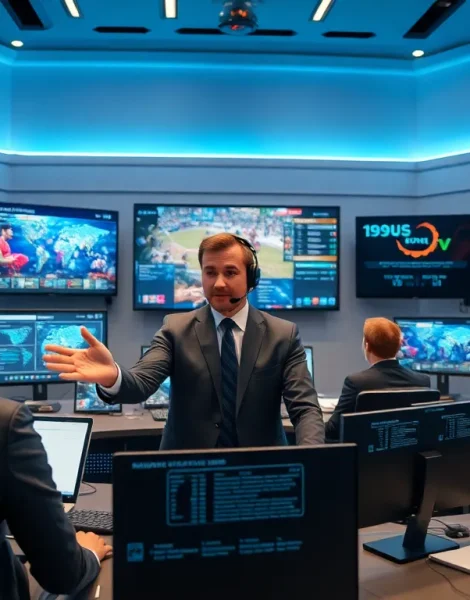
Esports coverage trends 2026 will reshape how fans watch competitive gaming. The industry continues its rapid growth, with global revenues projected to exceed $2 billion by 2026. Broadcasters, streaming platforms, and media companies are adapting fast. They’re investing in new technologies and content formats to capture growing audiences. This article breaks down the key esports coverage trends 2026 will bring to competitive gaming media. From AI-powered analysis to mobile-first broadcasts, the landscape is shifting in exciting ways.
Table of Contents
ToggleKey Takeaways
- Esports coverage trends 2026 will be shaped by AI-powered broadcasting, including automated camera systems, real-time analytics, and AI-assisted commentary.
- Mobile esports is taking center stage, with games like Mobile Legends and Free Fire driving massive growth in Southeast Asia, Latin America, and India.
- Interactive viewing features—such as choose-your-own camera angles, VR arena experiences, and second-screen companion apps—are replacing passive watching.
- Regional leagues and localized content are becoming essential for building deeper fan connections and sustainable audiences.
- Gamification elements like prediction markets and exclusive drops are turning casual viewers into highly engaged fans.
- Global esports revenues are projected to exceed $2 billion by 2026, driving major investment in new technologies and content formats.
The Rise of AI-Powered Broadcasting and Analysis
AI tools are transforming esports coverage trends 2026 in fundamental ways. Broadcasters now use machine learning to generate real-time statistics, highlight predictions, and player performance breakdowns. These systems process thousands of data points per second during live matches.
Automated camera systems represent another major shift. AI-driven directors can switch between player perspectives, track key moments, and create cinematic replays without human intervention. This reduces production costs while maintaining broadcast quality.
Commentary is also evolving. AI-assisted tools help analysts prepare talking points and surface relevant historical data mid-broadcast. Some platforms experiment with AI-generated commentary for secondary language streams, expanding global reach.
The esports coverage trends 2026 landscape shows AI handling much of the heavy lifting behind the scenes. Human talent remains essential for personality and expert insight. But the technology frees them to focus on storytelling rather than statistics.
Mobile Esports Takes Center Stage
Mobile gaming now dominates esports coverage trends 2026 discussions. Games like Mobile Legends, Free Fire, and PUBG Mobile draw massive audiences, especially in Southeast Asia, Latin America, and India. These regions represent the fastest-growing viewer bases in competitive gaming.
Broadcasters are adapting their production approaches for mobile-first audiences. Vertical video formats work better on smartphones. Shorter match highlights fit attention spans on social platforms. Live streams optimize for lower bandwidth connections common in emerging markets.
Sponsorship deals reflect this shift. Major brands increasingly target mobile esports events. Prize pools for mobile tournaments now rival traditional PC competitions in some regions.
The esports coverage trends 2026 will bring see mobile titles receiving premium production treatment. Networks that once focused exclusively on PC games like League of Legends or CS2 now dedicate resources to mobile broadcasts. This represents a significant change in how the industry prioritizes content.
Immersive Viewing Experiences and Interactive Features
Viewer engagement features define many esports coverage trends 2026 introduces. Passive watching is giving way to interactive experiences. Platforms let audiences choose camera angles, access individual player streams, and control their own replays.
VR and AR integration is growing steadily. Some tournaments offer virtual arena experiences where fans can “attend” matches from home. AR overlays on standard broadcasts add depth, showing player health bars, ability cooldowns, and strategic information in real time.
Second-screen experiences are now standard. Companion apps provide stats, predictions, and social features while viewers watch the main broadcast. These tools keep fans engaged during downtime between matches.
Watch parties and co-streaming programs expand community involvement. Esports coverage trends 2026 emphasize social viewing. Platforms encourage content creators to host watch parties with their audiences, multiplying reach for major events.
Gamification elements reward engaged viewers. Prediction markets, achievement systems, and exclusive drops incentivize longer watch times. These features turn casual viewers into invested fans.
Regional Leagues and Localized Content Growth
Regional leagues drive significant esports coverage trends 2026 will showcase. Global tournaments remain popular, but local competitions build deeper fan connections. Leagues in specific countries or regions create hometown heroes and rivalries that resonate with audiences.
Localization extends beyond language translation. Successful regional coverage adapts to cultural preferences in commentary style, broadcast timing, and content format. What works for European audiences differs from what engages Brazilian or Korean fans.
Media rights fragmentation continues. Different platforms secure rights for different regions. This creates challenges for global fans but opportunities for local broadcasters to customize their coverage.
Esports coverage trends 2026 point toward more investment in regional talent development. Local commentators, analysts, and production teams bring authenticity that international broadcasts can’t match. Organizations recognize this value and are building regional infrastructure.
The balance between global and local coverage remains delicate. Major events need worldwide reach. But building sustainable fan bases requires consistent regional content between tentpole tournaments.