Esports coverage examples show how media outlets have adapted to report on competitive gaming. The industry generates billions in revenue and attracts millions of viewers worldwide. Major publications like ESPN, The Washington Post, and dedicated outlets like Dot Esports now treat competitive gaming with the same seriousness as traditional sports.
This shift reflects a simple truth: esports audiences demand quality journalism. They want live broadcasts, in-depth player profiles, and detailed match analysis. Media companies have responded by developing specialized formats that serve these needs. From Twitch streams with professional commentary to longform features on rising stars, esports coverage has become its own distinct category of sports journalism.
Table of Contents
ToggleKey Takeaways
- Esports coverage examples include news reporting, feature writing, video content, social media updates, and podcasts—each serving distinct audience needs.
- Live event broadcasting mirrors traditional sports with professional commentary teams, analyst desks, and production quality rivaling NFL or NBA coverage.
- Player profiles and team features humanize competitors, transforming gamertags into compelling stories that build emotional connections with audiences.
- Major outlets like ESPN, The Washington Post, and Dot Esports now treat esports coverage with the same journalistic standards as traditional sports.
- Tournament recaps and match analysis help fans understand not just what happened, but the strategic decisions behind key moments.
- Video analysis and statistical tracking have become essential esports coverage formats, combining entertainment with in-depth education for dedicated fans.
Types of Esports Coverage in Modern Media
Esports coverage takes several forms across modern media. Each format serves a different purpose and reaches distinct audience segments.
News Reporting covers roster changes, tournament announcements, and industry developments. Sites like Dexerto and Esports Insider publish daily updates on team signings, game patches, and organizational news. These articles follow traditional journalism standards with sources, quotes, and factual accuracy.
Feature Writing offers longer, narrative-driven pieces. The Ringer and Polygon regularly publish 3,000+ word features on esports personalities and cultural moments. These stories explore the human side of competitive gaming, burnout, rivalries, and career transitions.
Video Content dominates esports coverage. YouTube channels like theScore esports produce documentary-style content that often outperforms written articles in engagement. Their series on legendary players and infamous moments regularly exceed one million views.
Social Media Coverage provides real-time updates during events. Twitter (now X) remains the primary platform for breaking esports news. Journalists and team accounts share highlights, reactions, and announcements as they happen.
Podcast Coverage has grown significantly since 2020. Shows like Summoning Insight (League of Legends) and Plat Chat (Valorant/Overwatch) offer weekly analysis from former pros and industry insiders. These podcasts attract dedicated listeners who want deeper discussion than articles provide.
Each esports coverage format fills a specific gap. Breaking news needs speed. Features need depth. Video content needs production value. Together, they create a complete media ecosystem around competitive gaming.
Live Event Broadcasting and Commentary
Live broadcasting represents the most visible form of esports coverage. Major tournaments attract viewership numbers that rival traditional sports events.
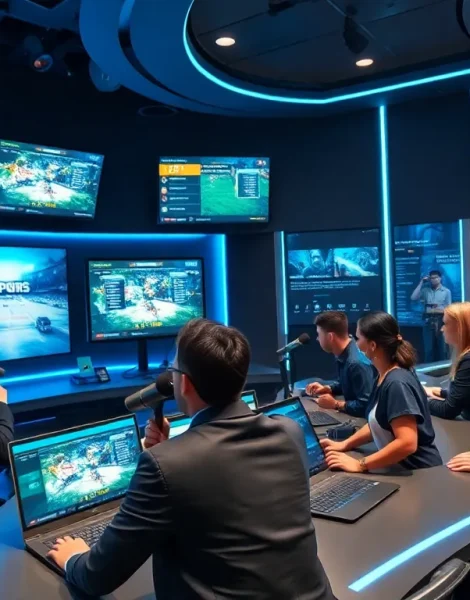
The 2023 League of Legends World Championship drew 6.4 million peak concurrent viewers. The broadcast featured professional commentary teams, analyst desks, and production quality comparable to NFL or NBA coverage. Riot Games invested heavily in stage design, graphics, and talent to make the viewing experience polished.
Commentary teams typically include two roles: play-by-play casters and color analysts. Play-by-play casters describe the action in real time. They call out abilities, kills, and objectives as they happen. Color analysts provide context and strategic insight between major moments. This structure mirrors traditional sports broadcasting.
ESPN has aired esports events since 2016. Their coverage of the Overwatch League and EVO fighting game championships brought competitive gaming to cable television audiences. The network applies its production standards to esports, complete with pre-game shows and post-match interviews.
Twitch remains the primary platform for esports live coverage. The platform’s chat feature creates a communal viewing experience that traditional broadcasts lack. Viewers react together, share memes, and engage with the content in real time. This interactivity distinguishes esports broadcasting from passive television viewing.
Production teams now use augmented reality graphics, player cams, and advanced replay systems. The Valorant Champions Tour, for example, features 3D map visualizations that help viewers understand complex plays. These innovations make esports coverage more accessible to casual viewers while satisfying hardcore fans.
Player Profiles and Team Features
Player profiles give esports coverage its emotional core. These stories transform gamertags into real people with compelling backgrounds.
The Washington Post published an extensive profile on Faker, the legendary League of Legends player, in 2022. The piece explored his upbringing in South Korea, his mental health struggles, and his status as the greatest player in the game’s history. This type of esports coverage brings mainstream credibility to competitive gaming.
Team features examine organizational culture and competitive dynamics. ESPN’s coverage of Team Liquid and Cloud9 has explored how these organizations build rosters, manage player burnout, and develop talent pipelines. These stories appeal to fans who follow teams across multiple games.
Retirement announcements generate significant coverage. When former pros like Shroud or Bjergsen stepped back from competition, multiple outlets published career retrospectives. These pieces analyze legacy, review career highlights, and gather quotes from teammates and rivals.
Rising star profiles help audiences discover new talent. Before major tournaments, outlets often spotlight unknown players who might break through. This esports coverage builds narratives that make events more engaging for viewers.
Behind-the-scenes content has become increasingly popular. Team YouTube channels and documentary series show practice sessions, team meetings, and travel. This access gives fans a connection to players they can’t get from match broadcasts alone.
Player profiles in esports coverage succeed when they humanize competitors. The best examples reveal personality, struggle, and growth, elements that make audiences care about match outcomes.
Tournament Recaps and Match Analysis
Tournament recaps and match analysis form the backbone of esports coverage. These pieces help fans understand what happened and why it matters.
Post-match articles typically publish within hours of an event’s conclusion. Dot Esports, Inven Global, and game-specific sites race to deliver recaps while interest peaks. A good recap includes final scores, key moments, standout performances, and quotes from players or coaches.
Match analysis goes deeper than recaps. Analysts break down draft strategies, team compositions, and pivotal decisions. For games like Dota 2 or League of Legends, this analysis can fill thousands of words. Fans want to understand why a team won, not just that they won.
Video analysis has grown as a format for esports coverage. YouTube channels dedicated to specific games produce breakdown content that examines replays frame by frame. These videos often perform well because they combine entertainment with education.
Statistical analysis has matured alongside esports coverage. Sites like Oracle’s Elixir (League of Legends) and HLTV (Counter-Strike) track detailed statistics that journalists use in their coverage. Win rates, damage numbers, and performance metrics add credibility to analysis pieces.
Tournament preview content builds anticipation before events begin. These articles examine bracket matchups, team form, and storylines to watch. Good preview content gives casual fans context they need to enjoy the broadcast.
The best esports coverage analysis avoids simply describing what happened. It explains the strategic thinking behind decisions, identifies turning points, and places results in historical context. This approach treats esports with the same analytical rigor as traditional sports journalism.